Robotic handling
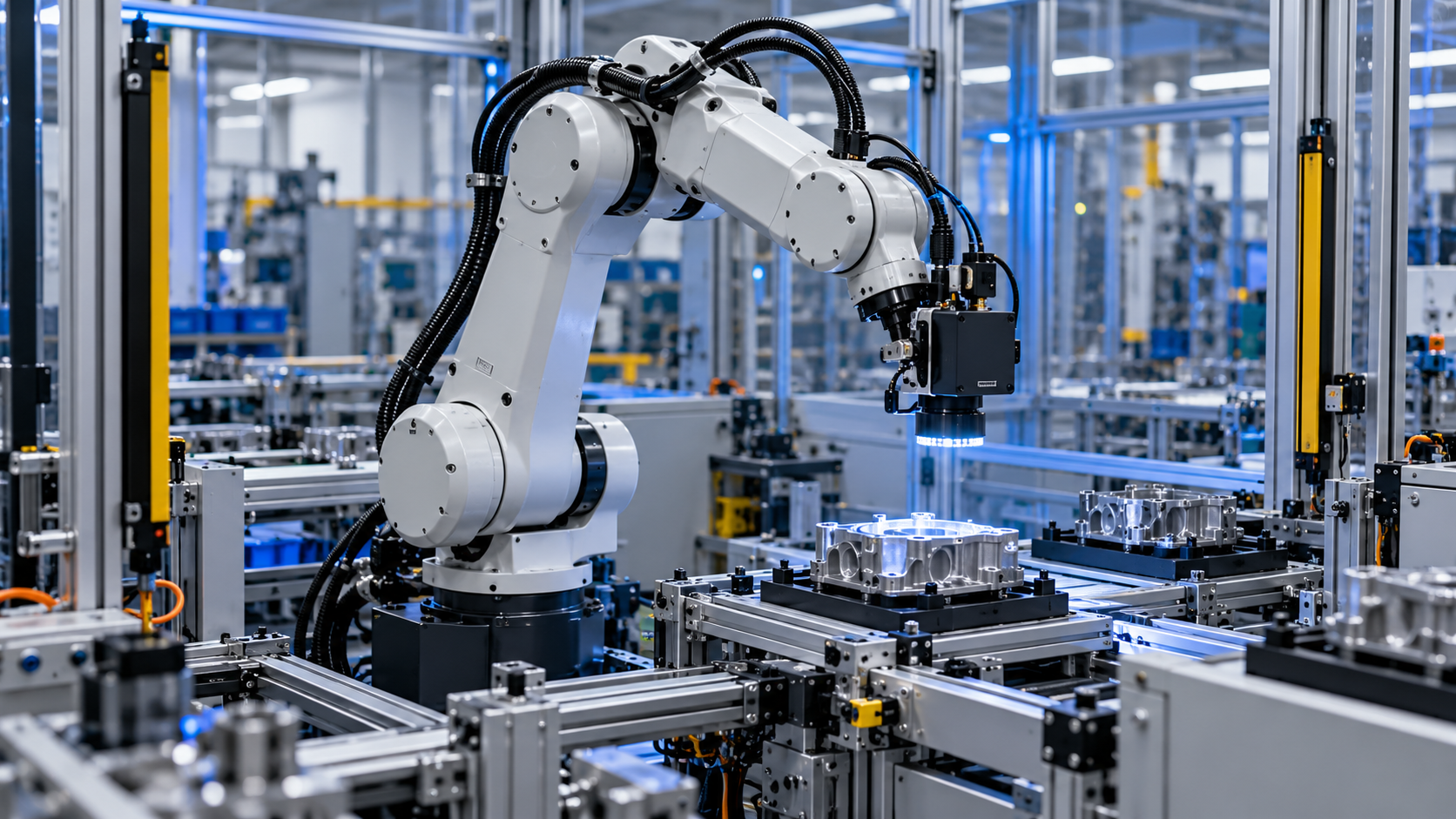
Pick-and-place, machine tending, transfer, orientation, and coordinated movement between process steps.
02CAPABILITIES / 02
Falco integrates robots, vision, tooling, safety, controls, and material flow into complete production systems—not disconnected technology packages.
WHAT THE CAPABILITY CONNECTS
A robot creates value only when every interface around it is engineered to work.
Falco develops the cell around the actual task: how the product arrives, what must be detected, how it is gripped, where it moves, and how the system recovers when conditions change.
Vision, end-of-arm tooling, guarding, motion, controls, and upstream or downstream equipment are developed together so the cell behaves as one operating system.
SERVICES & DELIVERABLES
Each subsystem is selected and configured around the application, payload, part condition, environment, and production sequence.
Pick-and-place, machine tending, transfer, orientation, and coordinated movement between process steps.
Locate, identify, orient, and inspect products or components using cameras integrated with cell control.
Design gripping, vacuum, fixture, sensing, and changeover tooling around the part and motion path.
Coordinate guarding, safety, PLC logic, robot programs, conveyors, fixtures, and operator interfaces.
WHERE IT APPLIES
Robotics and vision can be combined differently depending on how the product is presented and what the process must verify.
HOW THE WORK MOVES
Robot selection follows the application definition—not the other way around.
Define parts, presentation, cycle, payload, reach, inspection criteria, and failure modes.
Develop cell layout, motion, tooling, camera placement, guarding, and control architecture.
Build, program, calibrate, and test the robot, vision, controls, and physical interfaces together.
Install the cell, tune performance, validate behavior, and transfer operating knowledge.
START WITH THE REQUIREMENT
Bring Falco the process, constraint, or production objective. We will connect it to the right robotics & machine vision scope and the disciplines required to deliver it.